650 Type High-Precision Slitting Line

The XIONGJIN 650 Type High-Precision Slitting Line is designed for processing narrow-width metal coils into accurately slit strips. It handles stainless steel, carbon steel, PPGI and comparable coated coils within a thickness range of 0.2–2.0 mm. Designed for narrow coils, this thin gauge slitting line complements the 650 High-Precision Slitting Line for Copper & Stainless Steel and the wider 1350 High Precision Slitting Line — see what is slitting line for a process overview.
With a maximum coil width of 650 mm, coil weight of up to 10 MT and line speed of up to 180 m/min, this configuration supports efficient production of up to 40 strips. The minimum finished strip width is 10 mm, subject to material grade, thickness and slit pattern.
Key Technical Data
| Applicable raw materials | Stainless steel, carbon steel, PPGI and comparable coated coils |
|---|---|
| Material thickness | 0.2–2.0 mm |
| Maximum coil width | 650 mm |
| Maximum coil weight | 10 MT |
| Maximum line speed | 180 m/min |
| Maximum number of strips | Up to 40 strips |
| Minimum strip width | 10 mm |
Line Configuration
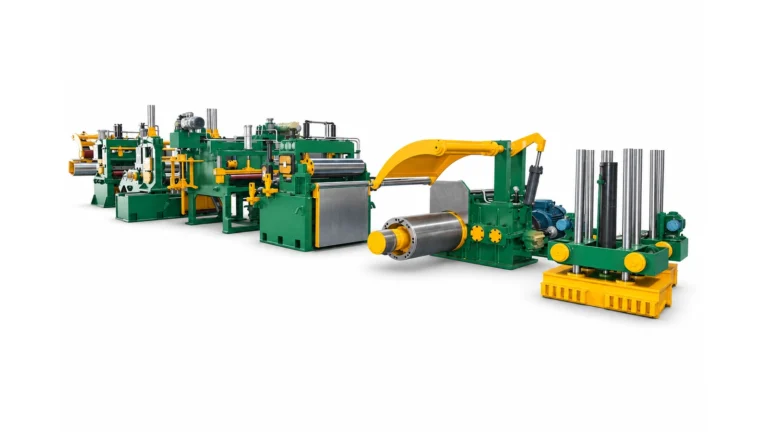
The illustrated configuration is arranged in sequence from coil loading to recoiling. The mechanical descriptions below refer only to the equipment shown on this 650 mm line.
Equipment by Process Sequence
Each line section is identified below in its process sequence, with its corresponding product image.
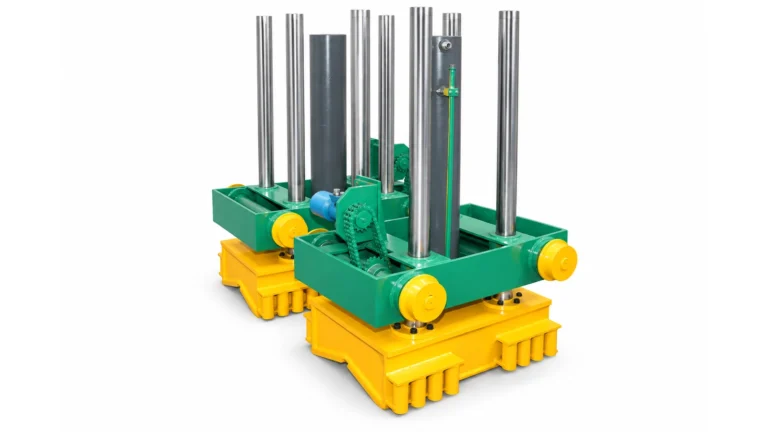
1. COIL LOADING & UNLOADING CAR
Transfers the master coil for loading to the decoiler and for removal after recoiling. The V-saddle supports the coil during positioning and handling.

2. DECOILER / UNCOILER
Supports and clamps the master coil, opens the coil and provides controlled unwinding to feed the strip head into the entry section.

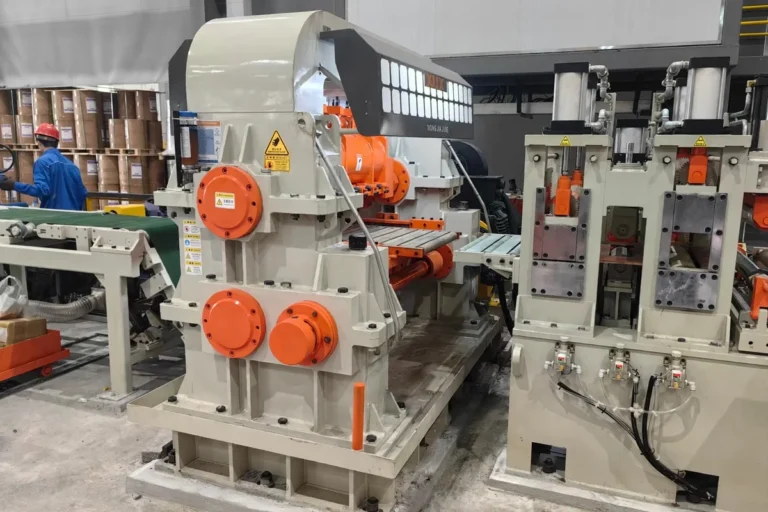
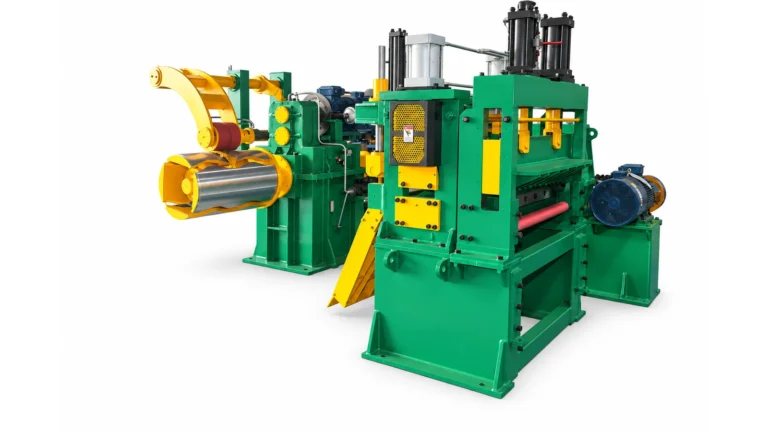
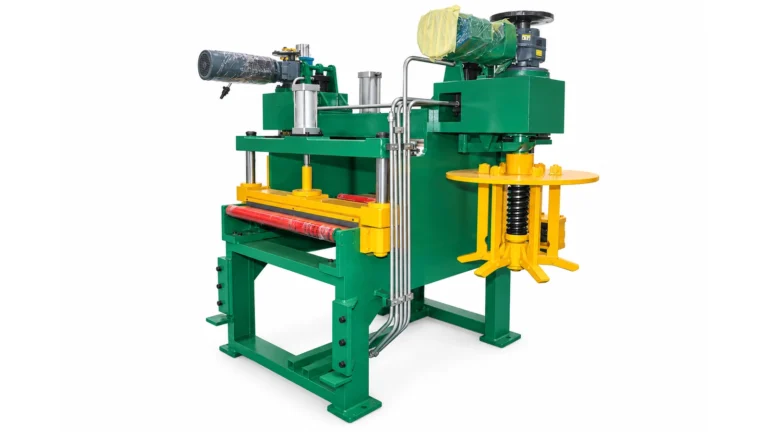
3. PINCH ROLL & CROP SHEAR – FRONT VIEW
Feeds the strip through the entry section and cuts the strip head or strip end as required before downstream processing.

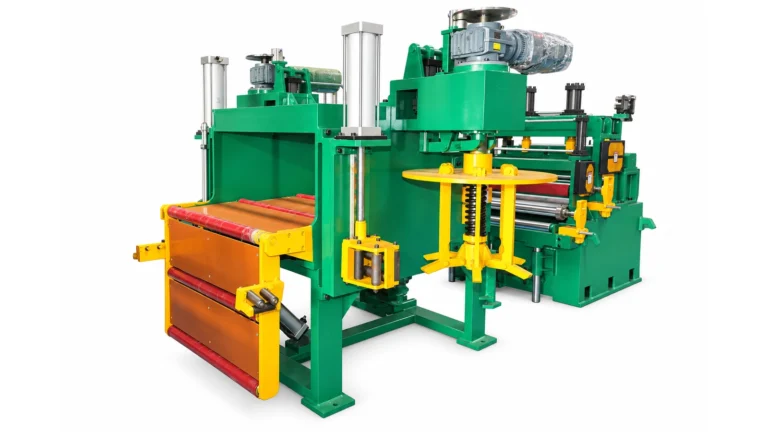
4. PINCH ROLL & CROP SHEAR – REAR VIEW
Rear-side view of the pinch-roll and crop-shear section.

5. PINCH ROLL & ENTRY TABLE
Guides the strip from the entry section toward the following process and helps maintain a stable, protected strip path.

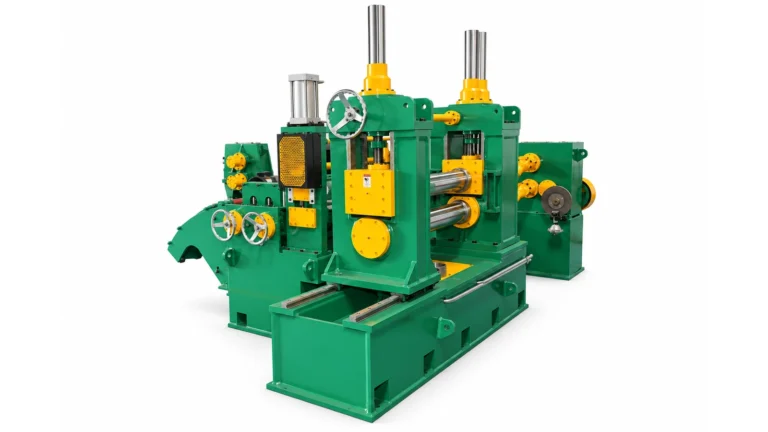
6. SIDE GUIDING & PRECISION SLITTER
Positions the strip across its width to reduce lateral deviation before it enters the slitting section.

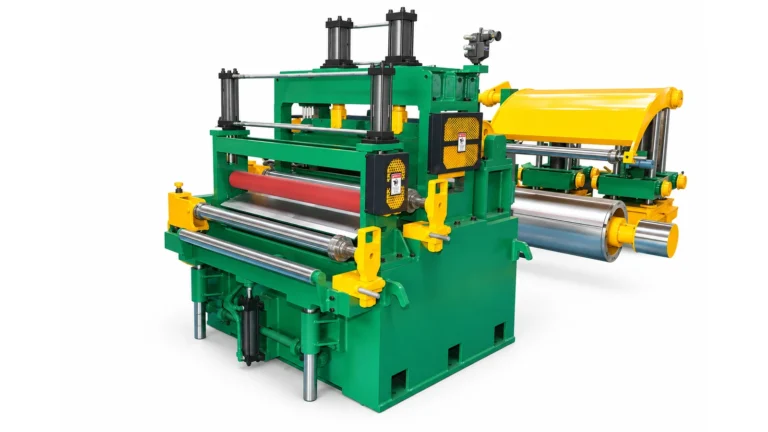
7. SIDE GUIDING, SLITTER & DELIVERY SECTION
The precision slitter longitudinally cuts the coil into required strip widths. Strip widths are set by the knife and spacer arrangement.

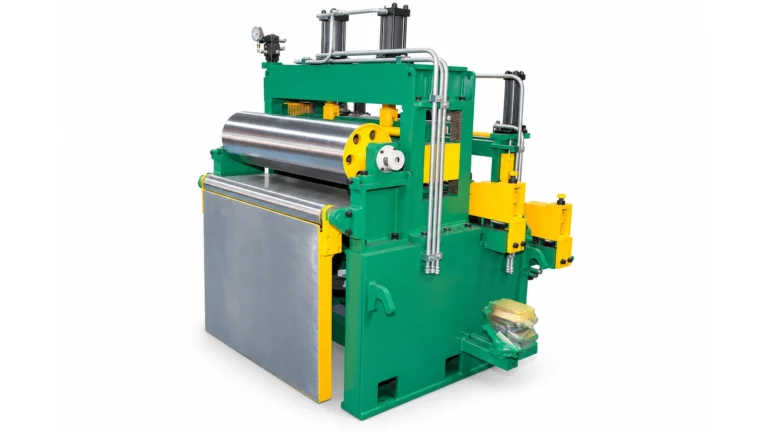
8. SIDE GUIDING & SLITTER WITH ENTRY TABLE
Entry-side view of the guiding and slitting section, showing the material path into the rotary slitter.

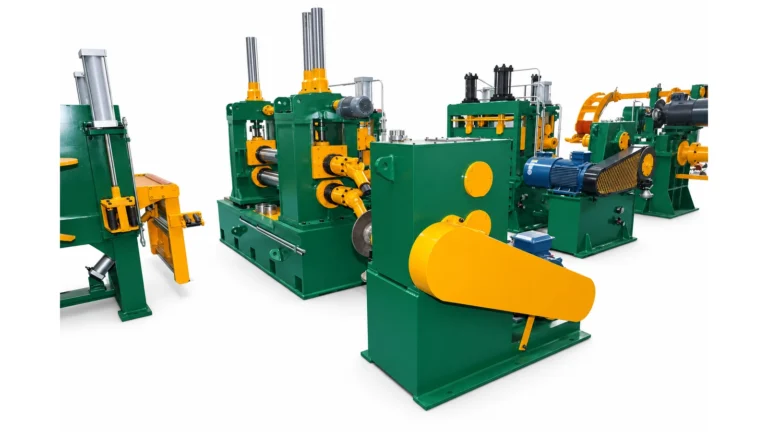
9. SLITTER – REAR VIEW
Rear-side view of the slitting section and its drive-side arrangement.

10. SCRAP WINDER
Collects and winds trimmed edge scrap from the slitting process for orderly removal and recycling.

11. SCRAP WINDER – ALTERNATE VIEW
Alternate view of the scrap-winding section and edge-scrap handling arrangement.

12. SEPARATOR, TENSION TABLE & GUIDING ROLLS
Separates individual slit strips, provides controlled strip tension and guides the material to the recoiler to help prevent strip deviation or tangling.

13. RECOILER
Winds the slit strips into finished coils. The separating arrangement helps guide each strip during recoiling.

14. RECOILER & COMPLETE LINE – SIDE VIEW
Side view of the recoiling end and the connected 650 mm slitting-line sections.

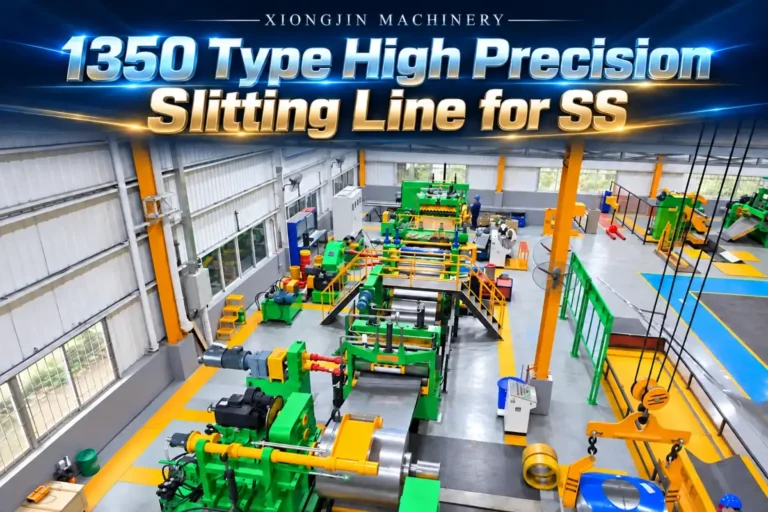
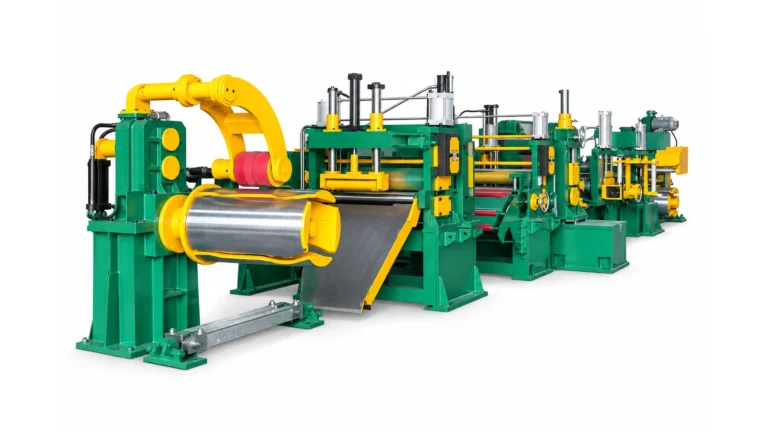
15. COMPLETE 650 SLITTING LINE – OVERALL VIEW
Overall view of the complete line configuration from coil handling through finished-coil recoiling.

Production Advantages
- Processes a wide material range, including stainless steel, carbon steel and PPGI.
- Supports narrow-strip production down to 10 mm.
- Provides capacity for up to 40 slit strips in one pass.
- Designed for coil handling up to 10 MT and line speed up to 180 m/min.
- Individual line sections can be configured to suit the selected material and production process.
Applications
This 650 mm slitting line is suitable for producers and processors requiring narrow slit coils for downstream roll forming, tube making, stamping, recoiling and other coil-processing applications.
Final performance and configuration should be confirmed according to material grade, yield strength, coil dimensions, slit pattern, tooling and the customer’s process requirements.