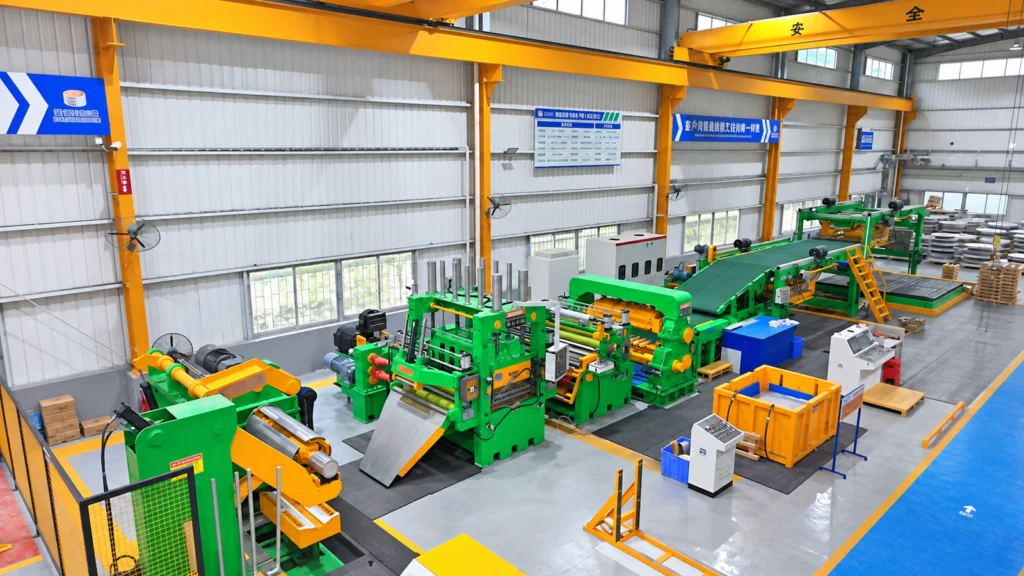
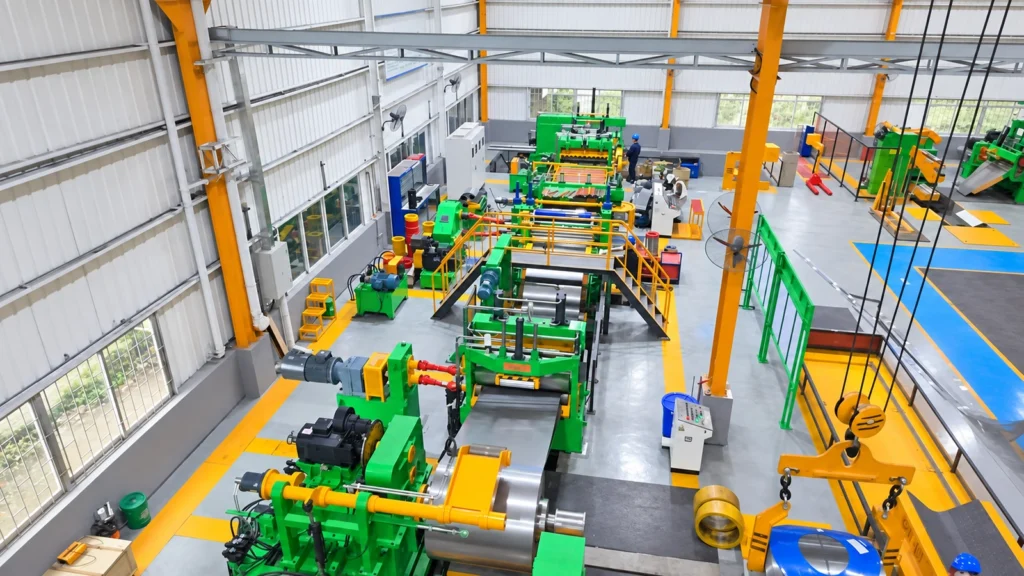
A slitting line that runs 2–4 mm coil all day cannot simply be “rated up” to slit 20 mm plate coil. Cutting force rises steeply with thickness, and almost every part of the line — tooling, arbors, drive, tension system, recoiler, even the crane in the bay — has to be specified differently. For a steel service center moving into heavy-gauge work, here is what actually changes.
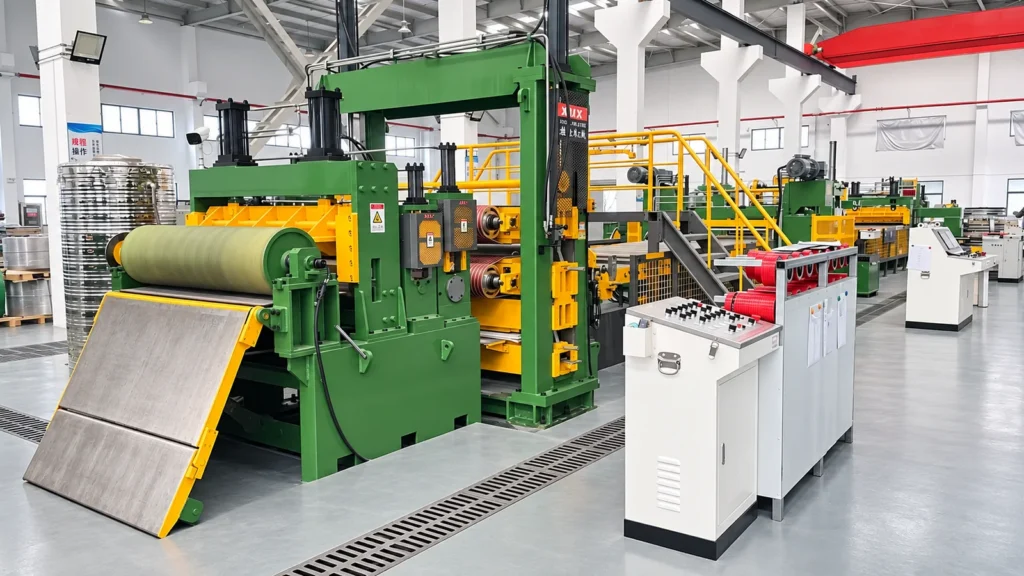
Tooling gets bigger — and less forgiving
Knife diameter must grow with thickness so the knife can engage and fracture the strip without excessive penetration force. On heavy-gauge lines, arbors of around 350 mm with knives in the 500 mm class are typical, compared with the much lighter tooling on thin-gauge lines. Knife material also matters more: at 20 mm, edge chipping and rapid wear become real risks, so high-grade tool steels and disciplined regrinding are part of the running cost, not an accessory.
Clearance and overlap: the 10 percent rule becomes millimetres
The standard starting point for horizontal knife clearance is roughly 10 percent of strip thickness for carbon steel, and somewhat wider — often 10–15 percent — for work-hardening stainless. At 1 mm thick, that is a tenth of a millimetre and easy to absorb. At 20 mm, the same rule means about 2 mm of clearance, and an error of half a millimetre is the difference between a clean fractured edge and a torn, burred one. Vertical overlap (knife penetration, commonly 25–50 percent of thickness as a rule of thumb) likewise scales up, and with it the separating force pushing the arbors apart. Burr targets do not relax with thickness either: many buyers still expect burr held to roughly 10 percent of strip thickness or less, which at heavy gauge demands correct clearance, sharp knives and a rigid head working together.
Arbors, stands and drive power
Everything above depends on the slitter head not deflecting. Heavy-gauge heads use larger-diameter arbors, heavier bearing housings and stands designed to hold knife position under loads that would visibly bend a light line. Drive power and gearbox torque rise with the cutting force, and the entry and exit equipment must match: a heavier uncoiler with proper hold-down and peeler arrangement to control the coil head, which on thick strip stores significant energy and can spring violently if mishandled.
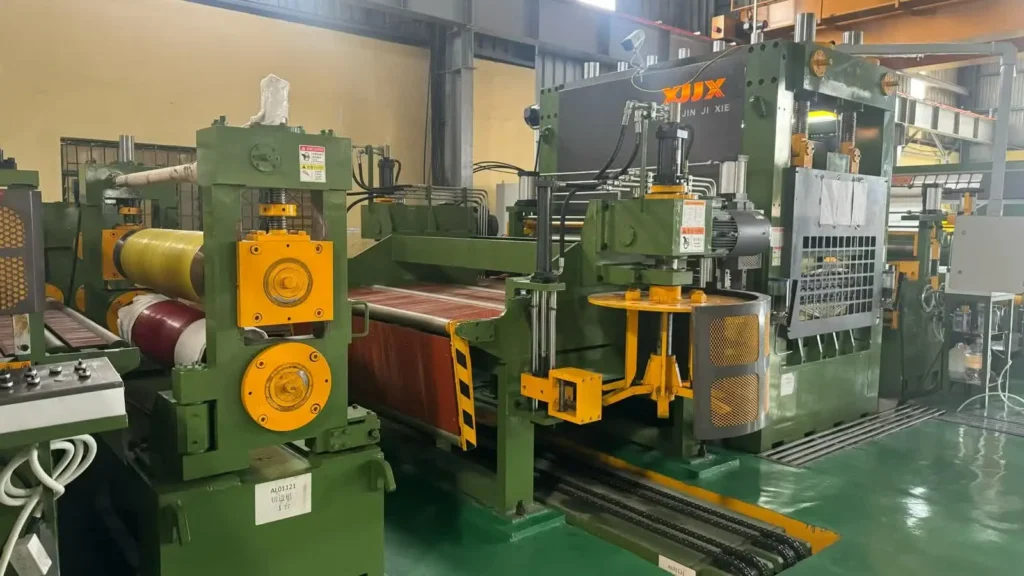
Tension, recoiling and scrap handling
Slit strips of 12–20 mm are stiff, heavy and unforgiving. The tension stand needs far higher braking force than a thin-gauge felt pad arrangement typically provides, and the recoiler needs the torque to build a tight, stable coil. Separator discs — usually on an overarm separator at the recoiler — become essential to keep heavy strips from interleaving or climbing over each other. Edge trim handling also changes: thick, stiff trim will not wind neatly on a scrap winder the way thin trim does, so heavy lines commonly use a scrap chopper instead.
Weight, crane and safety
A 20 mm line is normally bought together with heavier coils. Check the whole chain: coil car capacity, uncoiler and recoiler capacity, and the workshop crane — slitting heavy coil on a line whose loading gear tops out below your coil weight is a common and expensive mismatch. Foundation loads and guarding for heavy strip handling should be part of the specification discussion from the start.
The short version for buyers
When comparing heavy-gauge slitting lines, ask about arbor diameter, knife diameter and material, how clearance is set and held, recoiler torque, whether the scrap system is a winder or a chopper, and the maximum coil weight of every handling unit — not just the slitter head. XIONGJIN builds slitting lines for steel coil up to 20 mm thick, and can work through these specification points against your coil range and product mix.