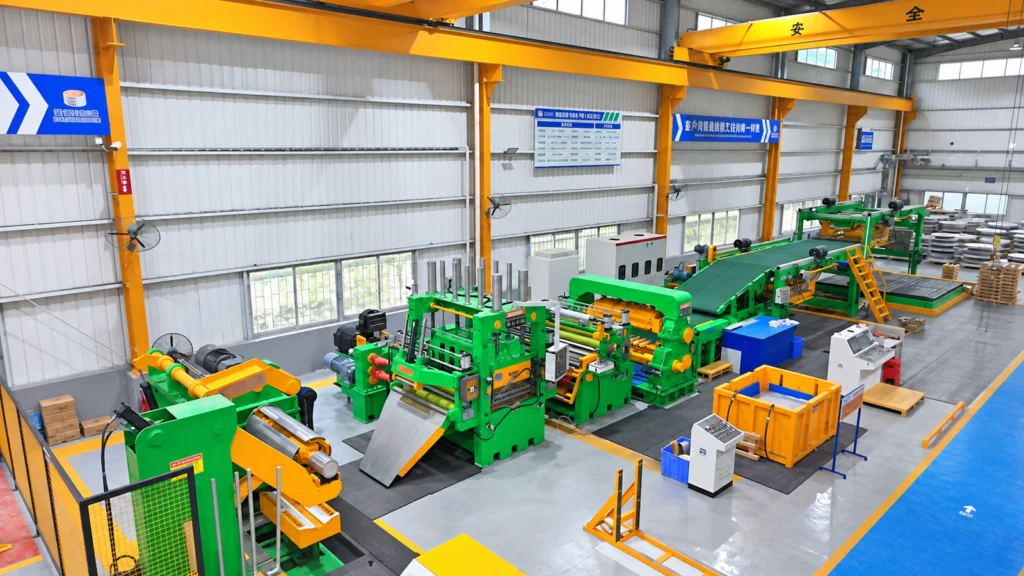
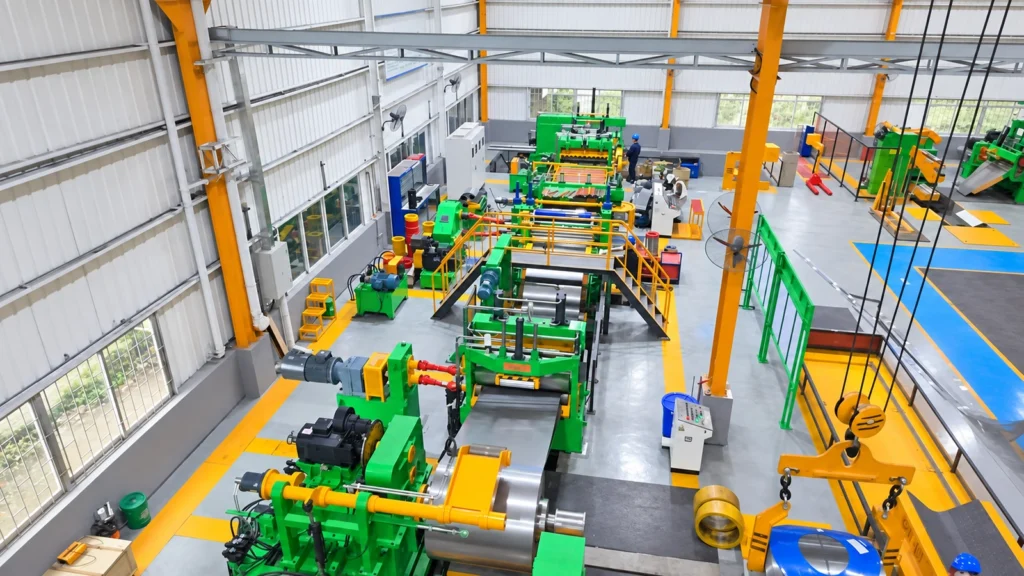
Every cut to length line has to solve the same problem: the coil feeds continuously, but sheets are discrete. The two classic answers are the rotary shear, which cuts while the strip keeps moving, and the stop-to-cut (start-stop) shear, which halts the strip for each cut. Both are proven designs — the right choice depends on your thickness range, sheet lengths and volumes.
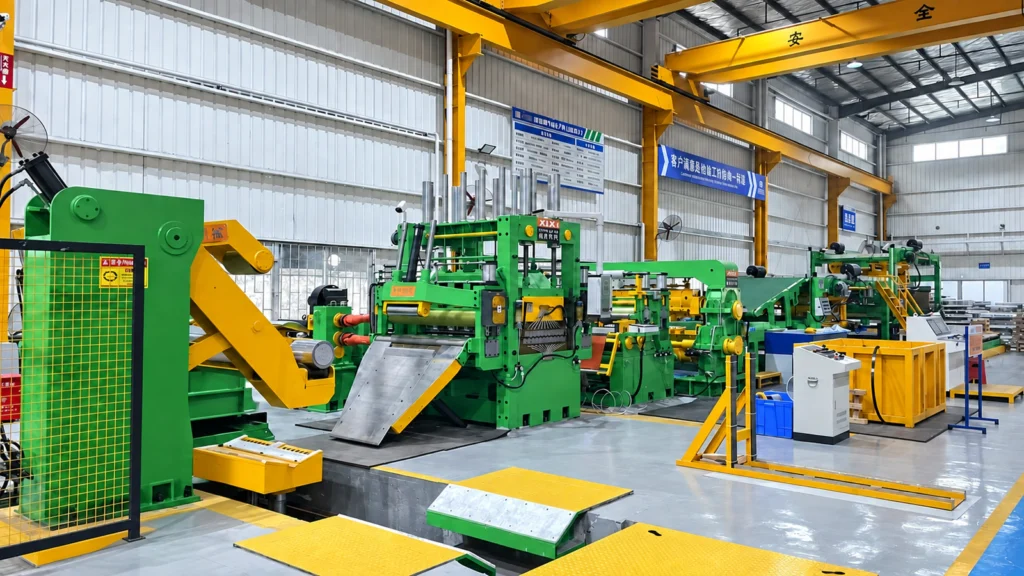
How each shear works
Rotary shear
A rotary shear uses a pair of rotating blade drums, usually in a double-eccentric arrangement that keeps the blades vertical through the cut. The drums are servo-driven and synchronised to strip speed by an encoder measuring system, so the blade meets the strip at line speed and shears it without the strip ever stopping. Because the uncoiler, leveler and shear all run continuously, a rotary shear line normally needs no looping pit.
Stop-to-cut shear
In a stop-to-cut line, feed rolls advance the strip by the programmed sheet length, the strip stops, and a guillotine-type shear makes the cut. The leveler and uncoiler upstream keep running into a looping pit, which absorbs the difference between continuous feeding and the stop-start motion at the shear. The shear itself is mechanically simple and robust.
Speed and productivity
The rotary shear wins on cycle rate. There is no acceleration and deceleration of the strip for each sheet, so short sheets can be cut at high counts per minute and the line sustains its rated strip speed. A stop-to-cut line loses time on every cycle to feeding, stopping and restarting; output falls as sheets get shorter, although long sheets at moderate volumes are perfectly economical.
Accuracy and surface quality
Rotary shear length accuracy is set by the encoder and servo control, and because the strip never slips against stopped rolls, repeatability is good. Just as important for many buyers: the strip is never clamped to a halt under the shear, so there are no stop marks or micro-indentations — one reason rotary shear lines are preferred for surface-critical material such as mirror-finish stainless and aluminium. Stop-to-cut accuracy is also good on long sheets, but each restart carries a small risk of feed-roll slip, and the stop itself can leave marks on sensitive surfaces.
Thickness range and product mix
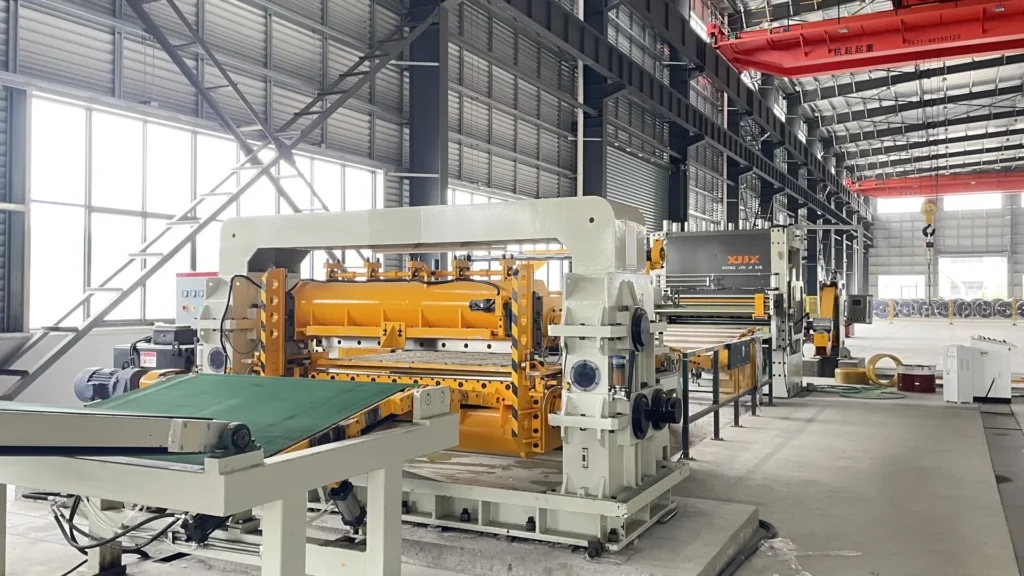
This is where stop-to-cut earns its place. Start-stop lines are commonly built for heavy plate — designs handling up to about 25 mm are widely offered — and the simple, massive shear suits thick, high-strength material and long sheets. Rotary shears are most common in thin and medium gauges, where their speed and surface advantages pay back. If your mix is mainly thin-to-medium sheet in volume, rotary shear fits; if it is heavy plate in long lengths, stop-to-cut is usually the rational choice.
Maintenance and cost logic
The stop-to-cut shear is the cheaper machine to buy and to maintain: a straightforward blade set, conventional drives, and wear concentrated in predictable places. The rotary shear asks more of its servo drives, synchronisation controls and drum bearings, and costs more upfront — the return comes from throughput, the elimination of the looping pit and its foundation work, and fewer surface rejects. Judge the comparison on cost per finished sheet at your volumes, not on machine price alone.
A practical way to decide
List your thickness range, your three most common sheet lengths, and your daily tonnage. Short-to-medium lengths, high counts and surface-critical products point to rotary shear; heavy gauges, long sheets and modest volumes point to stop-to-cut. XIONGJIN cut-to-length lines are built around rotary shear cutting, with leveling capacity for plate up to 30 mm thick — send us your coil and sheet specification and we will confirm the configuration that fits.